












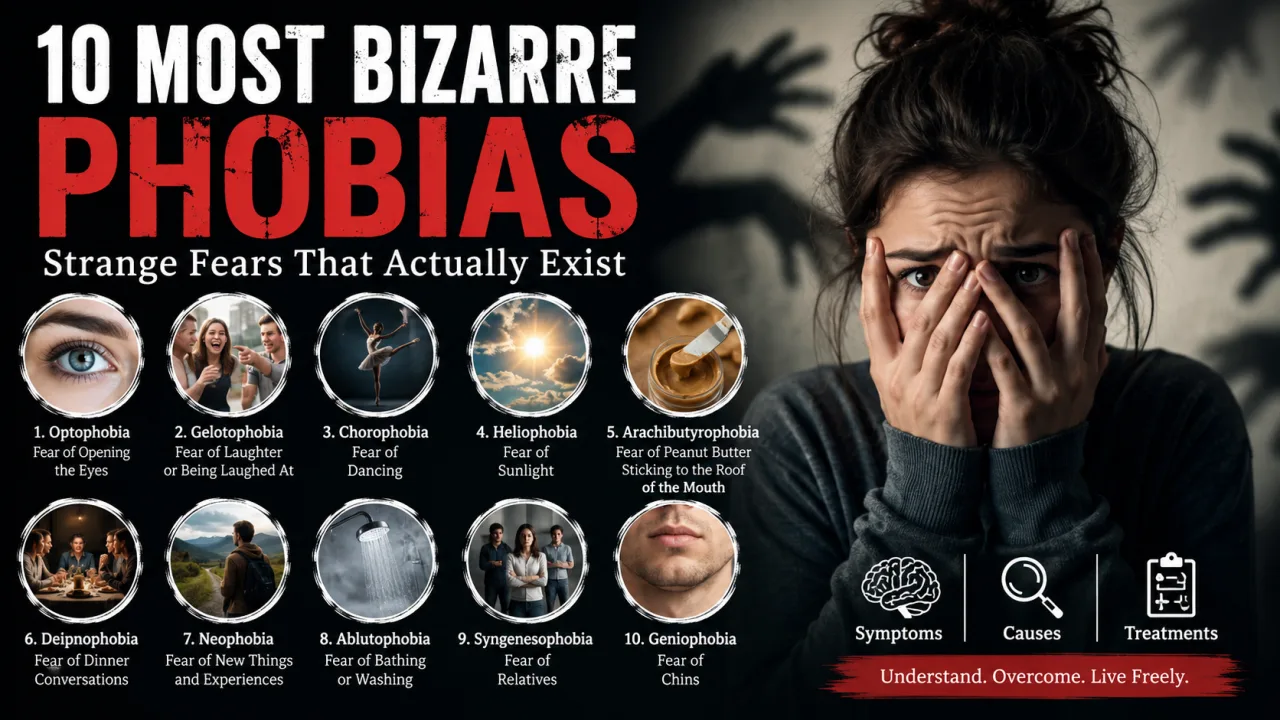
Fear is one of humanity's oldest survival mechanisms. It protects us from danger by preparing our minds and bodies to respond quickly to threats. While most fears are rational - such as fearing heights, venomous animals, or fire - some fears develop into persistent and overwhelming conditions known as '''phobias'''.
A phobia is much more than simple fear. It is an intense anxiety disorder that causes excessive and irrational fear toward a specific object, situation, activity, or concept. People experiencing phobias often recognize that their fear is unreasonable, yet they are unable to control the emotional and physical reactions that accompany it.
Modern psychology recognizes hundreds of named phobias. Some, such as arachnophobia (fear of spiders) and acrophobia (fear of heights), affect millions of people worldwide. Others are so unusual that many people are surprised to learn they actually exist. Imagine being terrified of opening your eyes, frightened by laughter, anxious around relatives, or fearful that peanut butter might stick to the roof of your mouth. Although these fears may sound humorous, they can significantly disrupt the daily lives of those affected.
Most phobias develop following stressful life experiences, learned behaviors, traumatic events, or underlying anxiety disorders. Genetics, personality traits, and brain chemistry may also contribute to their development. Fortunately, advances in psychology and behavioral medicine have made many phobias highly treatable through cognitive behavioral therapy, exposure therapy, medication, and lifestyle changes.
This article explores ten of the world's most bizarre phobias. Each section explains what the phobia is, its symptoms, possible causes, available treatments, and interesting facts based on current psychological understanding.
What Is a Phobia?
A '''phobia''' is a type of anxiety disorder characterized by persistent, excessive, and irrational fear of a particular object, activity, place, person, or situation. Unlike ordinary fear, which usually disappears once danger has passed, a phobia can continue for months or years and may interfere with education, employment, relationships, and everyday activities.
People with phobias often avoid anything associated with their fear. In severe cases, even thinking about the feared object may trigger intense anxiety or panic attacks.
Common symptoms include:
- Rapid heartbeat
- Sweating
- Trembling
- Shortness of breath
- Chest tightness
- Nausea
- Dizziness
- Feeling detached from reality
- Urge to escape
- Panic attacks
How Do Phobias Develop?
Researchers believe phobias usually develop through a combination of biological, psychological, and environmental influences.
Common contributing factors include:
- Traumatic childhood experiences
- Learned behavior from parents or family members
- Genetics
- Brain chemistry
- Chronic anxiety disorders
- Stressful life events
- Negative conditioning
- Overactive fear response in the brain
Not every person exposed to a frightening experience develops a phobia, suggesting that genetics and personality also play important roles.
Difference Between Fear and a Phobia
| Fear | Phobia |
|---|---|
| Normal protective response | Anxiety disorder |
| Triggered by real danger | Often triggered by little or no actual danger |
| Temporary | Persistent for six months or longer |
| Usually manageable | Difficult to control |
| Doesn't interfere significantly with life | May severely affect work, school, and relationships |
1. Optophobia (Fear of Opening the Eyes)
Overview
Optophobia is an extremely rare specific phobia involving an irrational fear of opening one's eyes. While opening the eyes is an automatic and effortless action for most people, individuals with optophobia experience overwhelming anxiety or panic when they anticipate opening their eyes or exposing themselves to visual surroundings.
The condition can significantly impair daily functioning because vision is essential for nearly every routine activity. Some people may keep their eyes closed for extended periods, avoid brightly lit environments, or rely heavily on others for assistance.
Although uncommon, optophobia is recognized as a genuine anxiety-related condition and may occur alongside other anxiety disorders, obsessive-compulsive disorder (OCD), post-traumatic stress disorder (PTSD), or depression.
Signs and Symptoms
Symptoms vary from mild discomfort to disabling panic.
Psychological symptoms include:
- Intense fear of opening the eyes
- Feeling overwhelmed in visually stimulating environments
- Persistent worry about seeing something frightening
- Fear of bright light
- Anticipatory anxiety before waking up
Physical symptoms include:
- Rapid heartbeat
- Sweating
- Trembling
- Shortness of breath
- Muscle tension
- Nausea
- Crying
- Panic attacks
Behavioral symptoms include:
- Keeping eyes closed unnecessarily
- Wearing eye coverings indoors
- Avoiding daylight
- Avoiding unfamiliar environments
- Social withdrawal
Causes
Experts believe optophobia may result from multiple factors.
Possible causes include:
- Childhood trauma
- Witnessing disturbing events
- Severe anxiety disorders
- PTSD
- Fear conditioning
- Neurological disorders
- Genetic predisposition
In some individuals, the fear develops after a frightening visual experience such as witnessing violence, accidents, or traumatic injuries.
Risk Factors
Individuals may be at higher risk if they have:
- Family history of anxiety disorders
- PTSD
- Panic disorder
- OCD
- Childhood abuse
- Chronic stress
- High emotional sensitivity
Diagnosis
Mental health professionals diagnose optophobia through psychological evaluation.
Diagnosis generally includes:
- Medical history
- Symptom assessment
- Anxiety screening
- Evaluation using DSM-5 criteria for specific phobia
- Exclusion of neurological or eye diseases
There is currently no laboratory test for diagnosing optophobia.
Treatment
Fortunately, optophobia responds well to evidence-based psychological therapies.
Cognitive Behavioral Therapy (CBT)
CBT helps patients identify irrational thoughts and replace them with healthier thinking patterns.
Exposure Therapy
Gradual, controlled exposure allows patients to slowly become comfortable opening their eyes and interacting with visual environments.
Relaxation Techniques
Patients often benefit from:
- Deep breathing
- Meditation
- Progressive muscle relaxation
- Mindfulness
Medication
When symptoms are severe, physicians may prescribe:
- SSRIs
- Anti-anxiety medications
- Beta blockers (for specific situations)
Medication is usually combined with therapy rather than used alone.
Complications
Without treatment, optophobia may lead to:
- Depression
- Social isolation
- Occupational difficulties
- Reduced independence
- Poor quality of life
Outlook
The prognosis is generally positive. Most individuals experience significant improvement through CBT and gradual exposure therapy. Early treatment typically leads to better long-term outcomes.
Interesting Facts
- It is considered one of the rarest specific phobias.
- Many sufferers recognize their fear is irrational.
- It may coexist with light sensitivity or PTSD.
- Severe cases can interfere with daily independence.
2. Gelotophobia (Fear of Laughter or Being Laughed At)
Overview
Gelotophobia is the persistent fear of being laughed at or ridiculed by others. Although everyone occasionally worries about embarrassment, people with gelotophobia experience extreme anxiety whenever they hear laughter, smiling, joking, or playful teasing.
The condition often develops after repeated experiences of bullying, humiliation, social rejection, or emotional abuse. Individuals may incorrectly assume that every laugh they hear is directed at them, even when there is no evidence supporting that belief.
As a result, many avoid social gatherings, classrooms, workplaces, celebrations, and public speaking opportunities. Over time, the fear can contribute to loneliness, depression, and reduced self-confidence.
Signs and Symptoms
Common emotional symptoms include:
- Fear of public embarrassment
- Constant worry about ridicule
- Low self-esteem
- Social anxiety
- Excessive self-consciousness
Physical symptoms may include:
- Sweating
- Blushing
- Trembling
- Rapid heartbeat
- Dry mouth
- Nausea
- Panic attacks
Behavioral symptoms include:
- Avoiding parties
- Avoiding public speaking
- Avoiding group conversations
- Difficulty trusting others
- Misinterpreting harmless laughter as mockery
Causes
Researchers believe gelotophobia develops through a combination of life experiences and biological vulnerability.
Common causes include:
- Childhood bullying
- Emotional abuse
- Public humiliation
- Strict parenting
- Social anxiety disorder
- Perfectionism
- Low self-esteem
Repeated negative social experiences reinforce the belief that laughter always signals criticism or rejection.
Risk Factors
Higher risk is associated with:
- Childhood trauma
- Social anxiety disorder
- Depression
- Autism spectrum traits
- High sensitivity to criticism
- Family history of anxiety disorders
Diagnosis
Mental health professionals diagnose gelotophobia through interviews, behavioral assessments, anxiety questionnaires, and psychological evaluations. Diagnosis focuses on the intensity, duration, and impact of the fear on daily life.
Treatment
Treatment usually combines several evidence-based approaches.
Cognitive Behavioral Therapy (CBT)
Helps challenge distorted beliefs about laughter and social judgment.
Exposure Therapy
Patients gradually participate in social situations involving humor, conversation, and public interaction.
Social Skills Training
Building communication skills often improves confidence and reduces avoidance behaviors.
Medication
Doctors may prescribe antidepressants or anti-anxiety medications when symptoms are severe or accompanied by generalized anxiety or depression.
Living With Gelotophobia
Recovery is often gradual. Helpful strategies include:
- Practicing mindfulness
- Building supportive relationships
- Participating in therapy groups
- Challenging negative assumptions
- Developing healthy self-esteem
Many people experience significant improvement with early treatment and consistent psychological support.
Interesting Facts
- The term comes from the Greek word ''gelos'' , meaning "laughter."
- Not everyone with social anxiety has gelotophobia.
- It has been studied extensively in personality psychology.
- Treatment success rates are generally high when therapy begins early.
3. Chorophobia (Fear of Dancing)
Overview
'''Chorophobia''' is a rare specific phobia characterized by an intense and persistent fear of dancing or situations where dancing is expected. While many people feel self-conscious about dancing in public, individuals with chorophobia experience overwhelming anxiety that goes far beyond ordinary nervousness. The fear can be triggered by the act of dancing, watching others dance, attending dance performances, or simply anticipating situations where dancing may occur.
The name originates from the Greek word ''choros'', meaning "dance." Chorophobia may develop independently or alongside social anxiety disorder, panic disorder, or other anxiety-related conditions.
Because dancing is a common feature of weddings, parties, festivals, school events, and cultural celebrations, this phobia can significantly interfere with social life and relationships.
Signs and Symptoms
Symptoms vary in severity and usually appear when a person anticipates or encounters dancing.
Emotional Symptoms
- Intense fear of dancing
- Anxiety before attending social events
- Fear of embarrassment
- Feeling trapped at celebrations
- Excessive self-consciousness
- Irritability
Physical Symptoms
- Rapid heartbeat
- Sweating
- Trembling
- Shortness of breath
- Dizziness
- Nausea
- Chest tightness
- Panic attacks
Behavioral Symptoms
- Avoiding weddings and parties
- Refusing invitations
- Leaving events early
- Standing away from dance floors
- Avoiding dance performances
- Making excuses to avoid celebrations
Causes
Although the exact cause remains unknown, researchers believe several factors may contribute.
Possible causes include:
- Embarrassing experiences while dancing
- Childhood ridicule
- Performance anxiety
- Social anxiety disorder
- Low self-confidence
- Traumatic memories associated with dancing
- Learned behavior from parents or family
For some individuals, the fear develops after being publicly criticized during school performances or social gatherings.
Risk Factors
People are more likely to develop chorophobia if they have:
- Social anxiety disorder
- Panic disorder
- Depression
- Childhood bullying
- Family history of anxiety disorders
- Perfectionistic personality traits
- Low self-esteem
Diagnosis
A mental health professional diagnoses chorophobia through psychological evaluation.
The evaluation usually includes:
- Medical history
- Mental health assessment
- Review of symptoms
- Duration of fear
- Impact on daily life
- Exclusion of other anxiety disorders
According to current psychiatric guidelines, symptoms generally persist for six months or longer before a diagnosis of specific phobia is considered.
Treatment
Cognitive Behavioral Therapy (CBT)
CBT is considered the most effective treatment.
Therapists help individuals identify irrational beliefs such as:
- "Everyone will laugh at me."
- "I must dance perfectly."
These thoughts are gradually replaced with healthier, evidence-based perspectives.
Exposure Therapy
Patients slowly face increasingly challenging situations.
Examples include:
- Watching dance videos
- Listening to dance music
- Observing others dancing
- Practicing simple dance movements privately
- Participating in small social events
Gradual exposure helps reduce fear over time.
Relaxation Techniques
Helpful techniques include:
- Deep breathing
- Meditation
- Progressive muscle relaxation
- Mindfulness exercises
Medication
Medication may be recommended when chorophobia occurs alongside severe anxiety or panic disorder.
Possible medications include:
- SSRIs
- Anti-anxiety medications
- Beta blockers for performance situations
Possible Complications
Untreated chorophobia may lead to:
- Social isolation
- Depression
- Relationship difficulties
- Missed celebrations
- Reduced quality of life
- Avoidance of career networking events
Outlook
Most people improve significantly through therapy. With proper treatment, many individuals gradually regain confidence and participate comfortably in social gatherings.
Interesting Facts
- Chorophobia is extremely rare.
- It differs from simply "not liking to dance."
- Many sufferers enjoy music but fear dancing itself.
- It often overlaps with social anxiety.
4. Heliophobia (Fear of Sunlight)
Overview
'''Heliophobia''' is the persistent and irrational fear of sunlight or bright light. While protecting the skin from excessive ultraviolet (UV) radiation is medically recommended, people with heliophobia experience intense anxiety even during normal sunlight exposure.
The condition may severely limit outdoor activities, employment, exercise, travel, and social interactions. Some individuals remain indoors throughout the day or only leave home after sunset.
Heliophobia may occur independently or as a symptom associated with anxiety disorders, post-traumatic stress disorder (PTSD), obsessive-compulsive disorder (OCD), migraine disorders, or certain medical conditions that increase light sensitivity.
Signs and Symptoms
Emotional Symptoms
- Fear of going outdoors
- Constant worry about sunlight
- Anxiety when curtains are opened
- Fear of bright environments
- Panic when exposed to daylight
Physical Symptoms
- Sweating
- Trembling
- Rapid heartbeat
- Hyperventilation
- Dizziness
- Dry mouth
- Nausea
- Panic attacks
Behavioral Symptoms
- Remaining indoors
- Wearing excessive protective clothing
- Constantly checking UV forecasts
- Avoiding vacations
- Refusing outdoor employment
- Limiting daytime activities
Causes
Several factors may contribute to heliophobia.
Traumatic Experiences
Some individuals develop heliophobia after:
- Severe sunburn
- Heat stroke
- Skin cancer diagnosis
- Witnessing serious illness
Anxiety Disorders
Generalized anxiety disorder and OCD can reinforce fears about sunlight.
Health Concerns
Excessive concern about:
- Skin cancer
- Premature aging
- UV radiation
- Heat-related illness
may gradually develop into a phobia.
Medical Conditions
Certain conditions cause genuine sensitivity to sunlight, including:
- Lupus
- Porphyria
- Xeroderma pigmentosum
- Certain medications causing photosensitivity
Healthcare providers must distinguish these medical conditions from heliophobia.
Risk Factors
Higher risk occurs among individuals with:
- Anxiety disorders
- OCD
- PTSD
- Chronic illness
- Family history of phobias
- Previous traumatic sun exposure
Diagnosis
Diagnosis involves both psychological and medical evaluation.
Doctors may first exclude:
- Eye disorders
- Neurological conditions
- Skin disorders
- Medication side effects
A psychologist or psychiatrist then evaluates whether the fear is disproportionate to actual risk.
Treatment
Cognitive Behavioral Therapy
CBT helps challenge catastrophic beliefs such as:
- "Any sunlight will immediately cause cancer."
Patients learn realistic risk assessment.
Exposure Therapy
Gradual exposure may include:
- Looking outside through windows
- Standing outdoors briefly
- Short walks
- Increasing outdoor activity over time
Medication
Severe anxiety may be treated using:
- SSRIs
- Anti-anxiety medications
Medication is generally combined with therapy.
Lifestyle Strategies
Patients may benefit from:
- Healthy sun safety habits
- Balanced information about UV exposure
- Regular exercise
- Stress management
Complications
Without treatment, heliophobia can contribute to:
- Vitamin D deficiency
- Depression
- Social isolation
- Sedentary lifestyle
- Reduced physical fitness
Outlook
Most patients respond well to therapy. Recovery is gradual and focuses on reducing irrational fear while maintaining appropriate sun protection habits.
Interesting Facts
- The Greek sun god "Helios" inspired the name.
- Heliophobia differs from medically diagnosed photosensitivity.
- Excessive avoidance of sunlight may lead to vitamin D deficiency.
- Proper treatment aims to create balanced—not reckless—sun exposure.
5. Arachibutyrophobia (Fear of Peanut Butter Sticking to the Roof of the Mouth)
Overview
Among the world's most unusual named phobias, '''arachibutyrophobia''' is perhaps the best known. It refers to an irrational fear that peanut butter will become stuck to the roof of the mouth.
Although often mentioned humorously, individuals experiencing this fear may develop significant anxiety around eating peanut butter or similar sticky foods.
In many cases, the fear is not actually about peanut butter itself. Instead, it reflects a deeper fear of choking, suffocation, swallowing difficulties, or loss of control while eating.
Because the condition frequently overlaps with choking phobia (phagophobia) or swallowing anxiety, proper psychological evaluation is important.
Signs and Symptoms
Emotional Symptoms
- Fear before eating peanut butter
- Worry about choking
- Anxiety around sticky foods
- Fear of swallowing
- Anticipatory panic
Physical Symptoms
- Rapid heartbeat
- Sweating
- Trembling
- Dry mouth
- Difficulty swallowing due to anxiety
- Panic attacks
Behavioral Symptoms
Individuals may avoid:
- Peanut butter
- Nut butters
- Sticky desserts
- Thick spreads
- Certain candies
- Eating in public
Causes
Researchers believe several factors contribute.
Possible causes include:
- Childhood choking experience
- Witnessing someone choke
- Anxiety disorders
- Panic disorder
- Previous traumatic eating experiences
- Learned fear from family members
Sometimes the phobia develops after a single frightening choking incident during childhood.
Risk Factors
Higher risk is associated with:
- Generalized anxiety disorder
- Panic disorder
- Previous choking episodes
- OCD
- Childhood trauma
- Family history of anxiety
Diagnosis
Healthcare providers evaluate:
- Medical history
- Eating behaviors
- Swallowing ability
- Psychological symptoms
- Other anxiety disorders
Medical causes of swallowing difficulty are usually ruled out before diagnosing a specific phobia.
Treatment
Cognitive Behavioral Therapy
CBT helps individuals challenge exaggerated beliefs about choking risk.
Exposure Therapy
Exposure progresses gradually.
Examples include:
- Looking at peanut butter
- Holding the container
- Smelling peanut butter
- Eating very small amounts
- Increasing portions over time
Relaxation Training
Useful methods include:
- Controlled breathing
- Mindfulness
- Progressive muscle relaxation
Medication
Medication may be prescribed if severe anxiety accompanies the phobia.
Possible Complications
Without treatment, individuals may experience:
- Nutritional restrictions
- Social avoidance
- Increased anxiety
- Fear of eating
- Reduced quality of life
Outlook
The prognosis is excellent with therapy. Most people successfully overcome food-related phobias through gradual exposure and cognitive restructuring.
Interesting Facts
- It is one of the longest named phobias in English.
- The fear usually centers on choking rather than peanut butter itself.
- Many people recover completely through behavioral therapy.
- Despite its unusual reputation, it is considered a genuine anxiety disorder when symptoms are severe.
6. Deipnophobia (Fear of Dinner Conversations)
Overview
'''Deipnophobia''' is a rare social phobia characterized by an intense and persistent fear of participating in conversations during meals, particularly at dinner. Unlike a fear of eating itself, deipnophobia centers on the social interactions that occur while dining. People with this condition often experience overwhelming anxiety when expected to speak, answer questions, or engage in conversation while eating.
Family dinners, business lunches, holiday gatherings, first dates, weddings, and restaurant outings can become highly stressful situations. Many individuals worry about saying the wrong thing, being judged by others, or embarrassing themselves in front of family members, colleagues, or strangers.
Although deipnophobia is uncommon, it can significantly impact a person's social life, professional relationships, and overall well-being if left untreated.
Signs and Symptoms
Symptoms usually begin before a planned meal and intensify as the event approaches.
Emotional Symptoms
- Intense fear of dinner conversations
- Anxiety before family meals
- Fear of being judged while speaking
- Worry about awkward silences
- Fear of eating in public
- Anticipatory anxiety before restaurant visits
Physical Symptoms
People with deipnophobia may experience:
- Rapid heartbeat
- Sweating
- Trembling
- Dry mouth
- Nausea
- Upset stomach
- Difficulty swallowing
- Shortness of breath
- Panic attacks
Behavioral Symptoms
Individuals may:
- Skip family dinners
- Decline invitations to restaurants
- Eat alone whenever possible
- Remain silent during meals
- Leave gatherings early
- Avoid business lunches and networking events
Causes
The exact cause remains unknown, but experts believe that deipnophobia develops through a combination of psychological and environmental factors.
Possible contributing factors include:
- Social anxiety disorder
- Childhood criticism during meals
- Embarrassing dining experiences
- Fear of public speaking
- Generalized anxiety disorder
- Low self-esteem
- Bullying or ridicule during childhood
- Family conflict occurring at mealtimes
For some individuals, repeated negative experiences during family dinners create lasting associations between meals and emotional distress.
Risk Factors
People may have an increased likelihood of developing deipnophobia if they have:
- Social anxiety disorder
- Panic disorder
- Depression
- Autism spectrum disorder
- Childhood trauma
- Perfectionistic personality traits
- Family history of anxiety disorders
Diagnosis
Mental health professionals diagnose deipnophobia through a comprehensive psychological evaluation.
Assessment may include:
- Review of medical history
- Anxiety questionnaires
- Clinical interview
- Evaluation of symptom duration
- Assessment of avoidance behaviors
- Exclusion of eating disorders and other psychiatric conditions
Healthcare providers also determine whether the fear is specifically related to conversation during meals or to eating itself.
Treatment
Cognitive Behavioral Therapy (CBT)
CBT is considered the first-line treatment for deipnophobia. It helps individuals identify irrational beliefs, challenge catastrophic thinking, and replace unhealthy thought patterns with more balanced perspectives.
Exposure Therapy
Gradual exposure often follows a structured approach, beginning with low-pressure situations before progressing to more challenging dining experiences.
Examples include:
- Eating with one trusted friend.
- Having conversations during meals at home.
- Dining in a quiet café.
- Participating in small group dinners.
- Attending larger social gatherings.
Repeated exposure helps reduce anxiety and increase confidence.
Social Skills Training
Individuals who struggle with conversation may benefit from structured communication exercises that improve listening, responding, and initiating discussions.
Medication
In severe cases, healthcare providers may prescribe:
- Selective serotonin reuptake inhibitors (SSRIs)
- Anti-anxiety medications
- Beta blockers for specific situations
Medication is generally most effective when combined with psychotherapy.
Living With Deipnophobia
Many people find that lifestyle changes can complement professional treatment.
Helpful strategies include:
- Practicing mindfulness before meals
- Eating with supportive family members
- Preparing conversation topics in advance
- Gradually increasing participation in social meals
- Learning relaxation techniques such as deep breathing
Possible Complications
Without treatment, deipnophobia may lead to:
- Social isolation
- Nutritional problems from skipped meals
- Depression
- Relationship difficulties
- Missed career opportunities involving networking
- Reduced quality of life
Outlook
The outlook is generally favorable. Most individuals experience meaningful improvement through cognitive behavioral therapy and gradual exposure. Early intervention often results in faster recovery and greater confidence during social dining situations.
Interesting Facts
- The word ''deipnon'' is Greek for "dinner."
- The condition is considered a subtype of social anxiety in many cases.
- It is different from the fear of eating or swallowing.
- Many people improve significantly with structured therapy.
7. Neophobia (Fear of New Things)
Overview
'''Neophobia''' refers to an excessive and persistent fear of new experiences, unfamiliar situations, or changes in routine. The word originates from the Greek words ''neo'' (new) and ''phobos'' (fear).
While most people experience some hesitation when facing change, individuals with neophobia experience overwhelming anxiety that can interfere with education, careers, relationships, and personal growth.
Neophobia can affect many areas of life, including trying new foods, visiting unfamiliar places, meeting new people, learning new skills, or accepting career opportunities. In children, food neophobia—the reluctance to try unfamiliar foods—is relatively common and often improves with age. In adults, however, generalized neophobia may require psychological treatment when it causes significant distress or impairment.
Signs and Symptoms
Symptoms often appear whenever individuals encounter unfamiliar situations or anticipate change.
Emotional Symptoms
- Intense fear of new experiences
- Anxiety about uncertainty
- Fear of making mistakes
- Excessive worry about the future
- Reluctance to leave familiar environments
Physical Symptoms
Common physical reactions include:
- Rapid heartbeat
- Sweating
- Trembling
- Muscle tension
- Dizziness
- Nausea
- Shortness of breath
- Panic attacks
Behavioral Symptoms
People with neophobia may:
- Avoid travel
- Refuse new job opportunities
- Resist technological changes
- Eat only familiar foods
- Decline invitations to unfamiliar places
- Maintain rigid daily routines
Causes
Neophobia develops through a combination of genetic, psychological, and environmental influences.
Possible causes include:
- Childhood trauma
- Generalized anxiety disorder
- Obsessive-compulsive disorder (OCD)
- Autism spectrum disorder
- Negative experiences with change
- Overprotective parenting
- Personality traits such as high harm avoidance
The brain's natural preference for predictability may become exaggerated, leading to persistent avoidance of unfamiliar situations.
Risk Factors
Risk factors include:
- Family history of anxiety disorders
- High sensitivity to uncertainty
- Previous traumatic experiences
- Perfectionism
- Chronic stress
- Neurodevelopmental conditions
Diagnosis
Diagnosis involves a detailed psychological assessment that examines:
- Duration of symptoms
- Severity of avoidance behaviors
- Functional impairment
- Presence of other anxiety disorders
- Medical history
Healthcare providers also distinguish neophobia from normal caution or personality preferences.
Treatment
Cognitive Behavioral Therapy (CBT)
CBT helps individuals recognize irrational beliefs about change and uncertainty while developing healthier coping strategies.
Exposure Therapy
Gradual exposure may include:
- Trying one new food.
- Visiting a new location.
- Learning a new hobby.
- Meeting new people.
- Accepting small routine changes.
Over time, repeated positive experiences reduce fear.
Acceptance and Commitment Therapy (ACT)
ACT encourages individuals to accept uncomfortable emotions while continuing to pursue meaningful goals despite anxiety.
Medication
For severe anxiety, physicians may prescribe antidepressants or anti-anxiety medications in combination with psychotherapy.
Living With Neophobia
Helpful coping strategies include:
- Breaking large changes into smaller steps
- Practicing mindfulness
- Building flexible routines
- Celebrating small successes
- Seeking support from trusted friends or therapists
Possible Complications
Untreated neophobia may contribute to:
- Limited career advancement
- Social isolation
- Missed educational opportunities
- Reduced independence
- Depression
- Lower overall life satisfaction
Outlook
With appropriate treatment, many individuals become increasingly comfortable with uncertainty and develop greater confidence in adapting to new experiences. Recovery is often gradual but highly achievable.
Interesting Facts
- Mild neophobia is considered a normal evolutionary survival trait.
- Food neophobia is common among young children.
- Severe adult neophobia is classified as an anxiety-related condition.
- Gradual exposure is one of the most effective treatments.
8. Ablutophobia (Fear of Bathing or Washing)
Overview
'''Ablutophobia''' is a rare specific phobia characterized by an intense, persistent, and irrational fear of bathing, washing, showering, or cleaning oneself. The name comes from the Latin word ''ablutio'', meaning "to wash." While many people occasionally postpone taking a shower or dislike certain aspects of bathing, individuals with ablutophobia experience overwhelming anxiety that can make personal hygiene extremely difficult.
The condition is more commonly reported in children, who often outgrow the fear as they mature. However, ablutophobia can also affect adolescents and adults, where it may significantly impact physical health, social relationships, employment, and self-esteem. Because regular hygiene is an essential part of daily life, untreated ablutophobia may lead to serious medical, psychological, and social consequences.
Ablutophobia is classified as a '''specific phobia''' under anxiety disorders and is often associated with obsessive-compulsive disorder (OCD), post-traumatic stress disorder (PTSD), autism spectrum disorder (ASD), or generalized anxiety disorder (GAD).
Signs and Symptoms
Symptoms usually appear when the individual thinks about bathing or is expected to wash.
Emotional Symptoms
- Intense fear of taking a bath or shower
- Persistent anxiety before bathing
- Feeling overwhelmed by the thought of washing
- Fear of slipping or drowning in the bathtub
- Feeling helpless or trapped during bathing
- Irritability when encouraged to bathe
Physical Symptoms
Like many anxiety disorders, ablutophobia can produce physical reactions, including:
- Rapid heartbeat
- Sweating
- Trembling
- Chest tightness
- Hyperventilation
- Nausea
- Dizziness
- Dry mouth
- Panic attacks
Behavioral Symptoms
Individuals may:
- Avoid showers for days or weeks
- Refuse baths entirely
- Wash only certain body parts
- Depend on dry shampoo or wet wipes
- Avoid swimming pools or locker rooms
- Wear excessive perfume to mask body odor
- Avoid social gatherings due to embarrassment
Causes
There is no single cause of ablutophobia. Researchers believe it develops through a combination of psychological, biological, and environmental factors.
Possible causes include:
Traumatic Experiences
- Near-drowning incidents
- Childhood accidents in the bathroom
- Burns from hot water
- Physical or emotional abuse during bathing
- Witnessing traumatic events involving water
Anxiety Disorders
People with generalized anxiety disorder, panic disorder, or OCD are more likely to develop irrational fears involving routine activities.
Sensory Processing Difficulties
Individuals with autism spectrum disorder or sensory processing disorder may find water, temperature changes, soap textures, or loud shower sounds extremely distressing.
Learned Behavior
Children may develop ablutophobia after observing fearful parents or caregivers.
Risk Factors
Factors associated with increased risk include:
- Childhood trauma
- PTSD
- OCD
- Autism spectrum disorder
- Family history of anxiety disorders
- Highly sensitive temperament
- Previous water-related accidents
Diagnosis
A healthcare provider or licensed mental health professional diagnoses ablutophobia through a detailed evaluation.
Assessment typically includes:
- Medical history
- Mental health history
- Duration of symptoms
- Impact on daily functioning
- Assessment for OCD or PTSD
- Exclusion of neurological or dermatological conditions
Symptoms usually must persist for at least six months and interfere significantly with daily life to meet the diagnostic criteria for a specific phobia.
Treatment
Cognitive Behavioral Therapy (CBT)
CBT is the most effective treatment for ablutophobia. It helps individuals identify irrational fears and replace them with healthier thought patterns.
Exposure Therapy
Exposure therapy involves gradually increasing contact with bathing-related activities.
Treatment may progress through stages such as:
- Looking at pictures of bathrooms
- Standing near a shower
- Touching running water
- Washing hands
- Washing the face
- Taking short showers
- Returning to a normal bathing routine
Relaxation Techniques
Helpful methods include:
- Deep breathing exercises
- Guided meditation
- Progressive muscle relaxation
- Mindfulness
Medication
For severe anxiety, healthcare providers may prescribe:
- Selective serotonin reuptake inhibitors (SSRIs)
- Anti-anxiety medications
- Short-term sedatives in carefully selected cases
Medication is generally used alongside psychotherapy rather than as a standalone treatment.
Complications
Untreated ablutophobia may result in:
- Skin infections
- Dental problems
- Poor personal hygiene
- Body odor
- Social isolation
- Depression
- Workplace difficulties
- Reduced quality of life
Prevention
Although there is no guaranteed way to prevent ablutophobia, early intervention after traumatic experiences and treatment of childhood anxiety disorders may reduce the risk.
Parents should avoid forcing fearful children into bathing situations and instead encourage gradual, supportive exposure.
Outlook
The prognosis is generally excellent. Most individuals respond well to cognitive behavioral therapy and exposure therapy. Recovery may take several weeks or months depending on symptom severity, but many people eventually resume normal hygiene routines without significant anxiety.
Quick Facts
| Category | Information |
|---|---|
| Medical Name | Ablutophobia |
| Disorder Type | Specific Phobia |
| Main Fear | Bathing or Washing |
| Common Age | Childhood (can continue into adulthood) |
| Treatment | CBT, Exposure Therapy, Medication |
| Prognosis | Generally Excellent |
Frequently Asked Questions
Is ablutophobia common?
No. It is considered one of the rarer specific phobias.
Can children outgrow ablutophobia?
Yes. Many childhood fears related to bathing resolve naturally, although persistent symptoms should be evaluated by a healthcare professional.
Is poor hygiene always caused by ablutophobia?
No. Poor hygiene can result from depression, dementia, physical disability, homelessness, or other medical conditions. Ablutophobia is only one possible cause.
Interesting Facts
- Ablutophobia is more frequently reported in children than adults.
- The condition is recognized as a genuine anxiety disorder despite appearing unusual.
- Some individuals fear water itself, while others fear the bathing process.
- Early treatment usually leads to better outcomes.
9. Syngenesophobia (Fear of Relatives)
Overview
'''Syngenesophobia''' is an extremely rare and unusual specific phobia involving an excessive fear of relatives or family members. The term is derived from the Greek word ''syngeneis'', meaning "relatives."
While many people experience occasional stress or discomfort around certain family members, syngenesophobia goes far beyond normal family conflict. Individuals with this condition experience intense anxiety whenever they anticipate interacting with relatives, attending family gatherings, or discussing family relationships.
The fear may involve close relatives, extended family members, or sometimes even the concept of family itself. In many cases, the condition develops following traumatic family experiences such as abuse, neglect, domestic violence, or chronic emotional conflict.
Unlike ordinary interpersonal disagreements, syngenesophobia causes persistent avoidance that significantly interferes with social functioning and emotional well-being.
Signs and Symptoms
Emotional Symptoms
- Intense fear before family gatherings
- Persistent anxiety about meeting relatives
- Fear of family conversations
- Feelings of panic around family members
- Excessive worry about family interactions
Physical Symptoms
- Rapid heartbeat
- Sweating
- Trembling
- Nausea
- Dizziness
- Shortness of breath
- Chest discomfort
- Panic attacks
Behavioral Symptoms
People with syngenesophobia often:
- Avoid family reunions
- Ignore phone calls from relatives
- Decline holiday invitations
- Limit communication
- Relocate to avoid family members
- Experience distress when discussing relatives
Causes
The exact cause varies considerably among individuals.
Potential contributing factors include:
- Childhood abuse
- Emotional neglect
- Domestic violence
- Family conflict
- Toxic family relationships
- PTSD
- Anxiety disorders
- Learned fear responses
For some people, the fear represents a protective response following years of negative family experiences.
Risk Factors
Individuals may have increased risk if they have experienced:
- Childhood trauma
- Emotional abuse
- Physical abuse
- Family violence
- PTSD
- Anxiety disorders
- Depression
Diagnosis
Diagnosis requires a careful psychological evaluation to distinguish syngenesophobia from understandable avoidance of abusive or dangerous family members.
Mental health professionals assess:
- Severity of fear
- Duration of symptoms
- Functional impairment
- Family history
- Presence of trauma-related disorders
Treatment
Treatment depends on the underlying cause.
Cognitive Behavioral Therapy
Helps identify irrational fears and reduce avoidance behaviors.
Trauma-Focused Therapy
When the fear stems from abuse or PTSD, trauma-focused therapies such as Trauma-Focused CBT or EMDR may be appropriate.
Family Therapy
In situations where relationships are safe and repairable, family counseling may improve communication and reduce anxiety.
Medication
Medication may help manage severe anxiety or depression when combined with psychotherapy.
Complications
Untreated syngenesophobia may contribute to:
- Social isolation
- Family estrangement
- Depression
- Chronic anxiety
- Reduced emotional support
- Loneliness
Outlook
The prognosis depends largely on the underlying cause. Individuals whose fear results primarily from anxiety often improve significantly with therapy. When trauma is involved, recovery may require longer-term treatment focused on processing traumatic experiences and rebuilding trust.
10. Geniophobia (Fear of Chins)
Overview
'''Geniophobia''' is a rare specific phobia characterized by an intense, persistent, and irrational fear of chins. Although it may sound unusual, people with this condition experience genuine anxiety when they see, touch, think about, or even discuss human chins. The fear may involve their own chin, another person's chin, or prominent facial features in general.
The term is derived from the Greek word ''geneion'', meaning "chin," and ''phobos'', meaning "fear."
Like many uncommon phobias, geniophobia can range from mild discomfort to severe anxiety that interferes with daily life. Individuals may avoid face-to-face conversations, photographs, video calls, physical contact, or crowded environments where they are likely to notice facial features. In severe cases, the condition can negatively affect employment, education, relationships, and self-esteem.
Mental health professionals classify geniophobia as a '''specific phobia''', a subtype of anxiety disorders recognized in modern psychiatric practice.
Signs and Symptoms
Symptoms usually begin immediately after exposure to the feared trigger.
Emotional Symptoms
People with geniophobia may experience:
- Intense fear when seeing a person's chin
- Anxiety during close conversations
- Fear of looking at photographs
- Excessive worry before social interactions
- Feeling embarrassed by their reaction
- Fear of losing control
Physical Symptoms
As with other specific phobias, physical symptoms are caused by activation of the body's "fight-or-flight" response.
Common symptoms include:
- Rapid heartbeat
- Sweating
- Trembling
- Hyperventilation
- Chest tightness
- Dry mouth
- Nausea
- Dizziness
- Panic attacks
Behavioral Symptoms
Individuals often develop avoidance behaviors, such as:
- Avoiding eye contact
- Looking away from faces
- Avoiding photographs
- Refusing video calls
- Staying away from crowded places
- Wearing masks even when unnecessary
- Avoiding physical intimacy
Causes
Researchers believe geniophobia develops through a combination of biological, psychological, and environmental influences.
Possible causes include:
Childhood Trauma
Some individuals report frightening or embarrassing experiences involving facial injuries or physical abuse during childhood.
Learned Behavior
Children may adopt irrational fears after observing anxious parents or caregivers.
Negative Social Experiences
Bullying, ridicule, or repeated embarrassment related to facial appearance may contribute to the development of the phobia.
Anxiety Disorders
People with generalized anxiety disorder, obsessive-compulsive disorder (OCD), or social anxiety disorder may be more susceptible.
Evolutionary Factors
Although no direct evolutionary explanation exists, the brain's tendency to associate certain visual features with danger may contribute in rare cases.
Risk Factors
Risk factors include:
- Family history of anxiety disorders
- Childhood trauma
- PTSD
- OCD
- Social anxiety disorder
- High emotional sensitivity
- Previous panic attacks
Diagnosis
Diagnosis is performed by a psychologist or psychiatrist through a comprehensive mental health assessment.
The evaluation generally includes:
- Review of symptoms
- Medical history
- Psychological interview
- Assessment of avoidance behaviors
- Evaluation using DSM-5 criteria for Specific Phobia
- Exclusion of neurological or medical conditions
To meet diagnostic criteria, symptoms generally:
- Persist for at least six months.
- Cause significant distress or impairment.
- Be disproportionate to the actual danger.
Treatment
Cognitive Behavioral Therapy (CBT)
CBT is considered the gold standard treatment.
Therapy focuses on identifying irrational beliefs such as:
- "Looking at a chin is dangerous."
- "I won't be able to control my anxiety."
Patients gradually learn healthier ways of thinking and responding.
Exposure Therapy
Exposure therapy is highly effective for most specific phobias.
Treatment may progress through carefully controlled stages:
- Looking at simple drawings of faces
- Viewing photographs
- Watching videos
- Speaking with a trusted person
- Participating in group conversations
- Returning to normal social activities
Repeated exposure helps reduce the brain's fear response.
Relaxation Techniques
Healthcare professionals often recommend:
- Deep breathing
- Meditation
- Progressive muscle relaxation
- Guided imagery
- Mindfulness exercises
Medication
Medication is not usually the primary treatment but may be prescribed when severe anxiety or panic attacks interfere with therapy.
Common medications include:
- Selective serotonin reuptake inhibitors (SSRIs)
- Serotonin-norepinephrine reuptake inhibitors (SNRIs)
- Anti-anxiety medications (short-term use)
- Beta blockers for performance-related anxiety
Living With Geniophobia
Many individuals benefit from combining professional treatment with self-care strategies.
Helpful practices include:
- Following the treatment plan consistently
- Learning stress-management techniques
- Practicing gradual exposure
- Joining anxiety support groups
- Maintaining regular sleep
- Exercising regularly
- Reducing caffeine intake if it worsens anxiety
Possible Complications
If left untreated, geniophobia may contribute to:
- Chronic anxiety
- Social isolation
- Depression
- Relationship difficulties
- Occupational challenges
- Reduced quality of life
- Panic disorder
Can Geniophobia Be Prevented?
There is no guaranteed way to prevent specific phobias.
However, the following may reduce risk:
- Early treatment of childhood anxiety
- Supportive parenting
- Healthy coping strategies
- Prompt treatment after traumatic events
- Building emotional resilience
Prognosis
The outlook for individuals with geniophobia is generally very good.
Research on specific phobias consistently shows that most people improve significantly through cognitive behavioral therapy and exposure therapy. Early diagnosis and treatment usually result in faster recovery and lower relapse rates.
Many individuals eventually regain confidence in social interactions and experience little or no anxiety when exposed to previously feared situations.
Quick Facts
| Category | Information |
|---|---|
| Medical Name | Geniophobia |
| Disorder Type | Specific Phobia |
| Primary Fear | Chins |
| Common Symptoms | Panic, sweating, avoidance |
| Diagnosis | Psychological evaluation |
| Primary Treatment | CBT + Exposure Therapy |
| Prognosis | Excellent with treatment |
Frequently Asked Questions
Is geniophobia real?
Yes. Although extremely rare, geniophobia is recognized as a form of specific phobia involving an irrational fear of chins or chin-related stimuli.
Is it simply a dislike of chins?
No. Disliking a facial feature is not the same as a phobia. A phobia causes overwhelming anxiety, panic, and avoidance that interfere with daily life.
Can children develop geniophobia?
Yes. Like many anxiety disorders, it may begin during childhood or adolescence.
Can geniophobia be cured?
Many people recover completely or experience significant improvement through evidence-based treatments such as cognitive behavioral therapy and exposure therapy.
Living With Rare Phobias
Although many of the phobias discussed in this article sound unusual or even humorous, they are genuine mental health conditions that can cause significant emotional distress. People living with rare phobias often recognize that their fears are irrational, yet they may feel powerless to control the intense anxiety triggered by specific objects, situations, or experiences.
Successful management often involves a combination of:
- Professional psychological therapy
- Family and social support
- Gradual exposure to feared situations
- Healthy lifestyle habits
- Stress-management techniques
- Medication when clinically appropriate
Early intervention can greatly improve long-term outcomes and help individuals regain confidence and independence.
When Should You Seek Professional Help?
Consult a healthcare professional or licensed mental health provider if a fear:
- Persists for six months or longer.
- Causes panic attacks.
- Leads to avoidance of everyday activities.
- Interferes with work, school, or relationships.
- Causes significant emotional distress.
- Results in depression or social isolation.
Seeking help early can prevent symptoms from becoming more severe and improve overall quality of life.
Conclusion
Fear is a natural human emotion, but when fear becomes persistent, overwhelming, and irrational, it may develop into a specific phobia. While conditions such as '''optophobia''', '''gelotophobia''', '''chorophobia''', '''heliophobia''', '''arachibutyrophobia''', '''deipnophobia''', '''neophobia''', '''ablutophobia''', '''syngenesophobia''', and '''geniophobia''' are among the world's most unusual phobias, they are very real to those who experience them.
Fortunately, advances in psychology and psychiatry have made these conditions highly treatable. Cognitive behavioral therapy, exposure therapy, mindfulness, and—when appropriate—medication have helped countless individuals overcome debilitating fears and reclaim their daily lives.
Greater awareness of rare phobias not only reduces stigma but also encourages compassion for those facing challenges that may not always be visible. With proper diagnosis, treatment, and support, people with even the most bizarre phobias can lead healthy, fulfilling, and productive lives.
References
Medical Organizations
- Cleveland Clinic
- National Institute of Mental Health (NIMH)
- American Psychiatric Association (APA)
- National Health Service (NHS)
- MedlinePlus
- Mayo Clinic
Peer-Reviewed Research
- DSM-5-TR: ''Diagnostic and Statistical Manual of Mental Disorders''
- National Center for Biotechnology Information (NCBI)
- PubMed
- World Health Organization (WHO)
Additional Sources
- Verywell Mind
- Medical News Today
- Healthline
- Medicover Hospitals
- Oxford CBT
- Inspire the Mind
- DoveMed
- Osmosis
- Fear of Stuff
- 10MostToday




















Log in with